
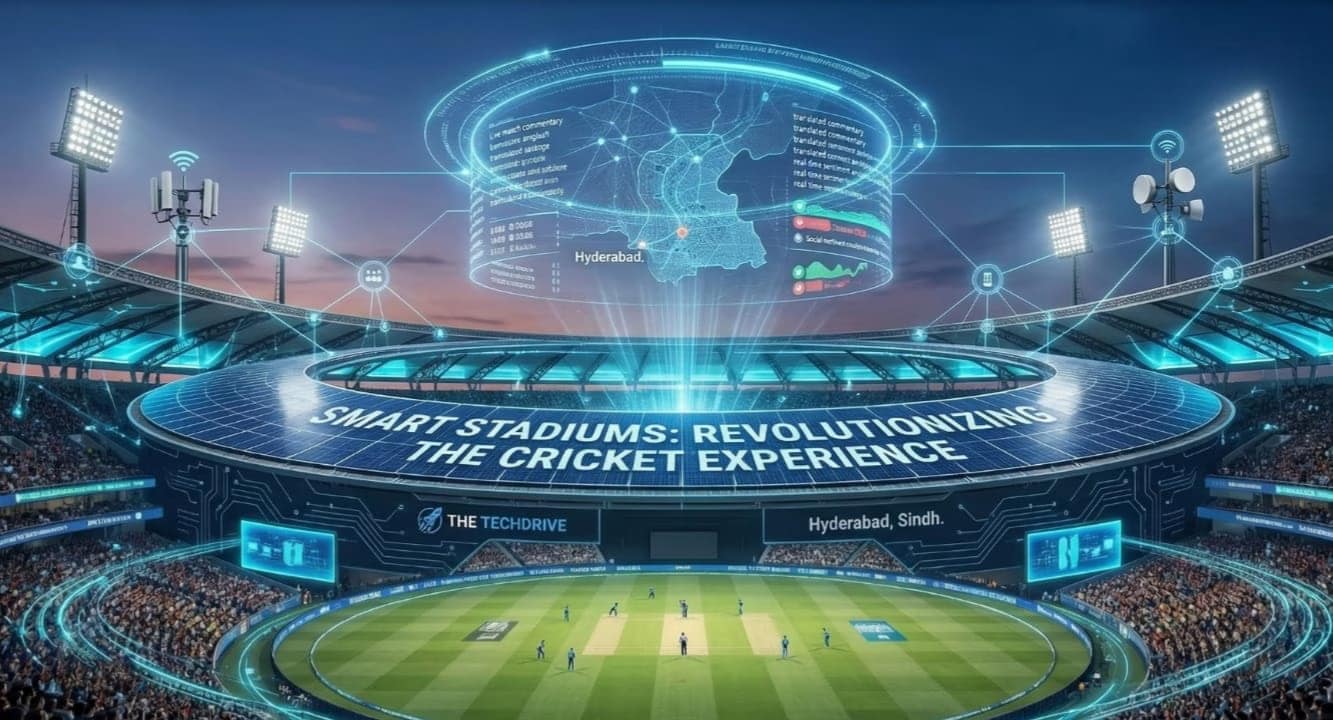
The game of cricket has always been a beautiful blend of raw talent, weather conditions, and on-the-spot human decision-making. For decades, the sport relied heavily on the gut feelings of captains and the sharp eyes of the umpires. However, if you look closely at the modern game, the pitch is no longer just made of turf and soil—it is deeply embedded with data, algorithms, and Artificial Intelligence (AI).
Today, the intersection of software engineering and sports has created a new era for cricket. From the exact moment the bowler releases the ball to the instant a highlight reel is uploaded online, complex technologies are working behind the scenes. Let’s take a deep dive into how Artificial Intelligence, Machine Learning, and Generative AI are fundamentally altering the gentleman’s game.
1. Computer Vision and the Evolution of Umpiring
The Decision Review System (DRS) is perhaps the most visible piece of technology for the average cricket fan. But beneath the surface of the TV graphics lies a highly sophisticated framework of Computer Vision.
Technologies like Hawk-Eye do not just record video; they process visual data in real-time. By utilizing multiple high-frame-rate cameras placed strategically around the stadium, the system captures the ball’s trajectory from various angles. AI algorithms then process this massive influx of visual data—often calculating the ball’s speed, spin rate, bounce, and predicted path within milliseconds. This eliminates human error in crucial LBW (Leg Before Wicket) decisions. The system has become so advanced that it now factors in the real-time degradation of the pitch and atmospheric humidity to map the precise future trajectory of the ball.
2. Predictive Analytics: The Machine Learning Strategy
Gone are the days when field placements were dictated solely by a captain’s intuition. Today, data science is sitting right there in the dressing room. Teams now employ dedicated data analysts who use powerful programming languages like Python to build complex Machine Learning models.
These models scrape and analyze decades of historical match data, player statistics, and pitch conditions. By feeding this data into predictive algorithms, teams can generate highly accurate ‘Pitch Maps’ and ‘Wagon Wheels’.
- Batsman Profiling: ML algorithms can instantly reveal a batsman’s weakness. For example, data might show that a specific player has a 60% higher chance of being dismissed by a slower bouncer outside the off-stump during the death overs.
- Match Simulators: Teams run thousands of simulated match scenarios using historical data to calculate the exact probability of winning if they choose to bat or bowl first on a specific ground.
This level of granular, data-driven strategy ensures that every single delivery is calculated for maximum impact.
3. Natural Language Processing (NLP) and Broadcasting
Have you ever wondered how official broadcasters manage to upload a perfectly edited 10-minute highlight reel to YouTube mere moments after a grueling 8-hour match concludes? The answer lies in Natural Language Processing (NLP) and Generative AI.
Broadcasters no longer rely entirely on human video editors working frantically in a control room. Instead, AI systems monitor the live audio feed of the match. Using NLP, the system “listens” to the commentators, analyzing the sentiment and volume of their words. When the algorithm detects high-energy keywords like “What a shot!”, “Bowled him!”, or a sudden massive spike in the crowd’s cheering, it automatically tags that specific timestamp.
Generative AI tools then seamlessly stitch these high-impact moments together, applying the correct transitions and graphics, to generate a complete highlight package almost instantaneously.
4. Wearable Tech and Injury Prevention
Fast bowling is arguably one of the most physically demanding activities in the sporting world, placing immense unnatural stress on the human back and knees. Managing player workload is critical, and AI has stepped in as the ultimate physiotherapist.
Modern cricketers wear smart GPS vests and biometric sensors during practice sessions and matches. These IoT (Internet of Things) devices track heart rate, distance covered, sprint speeds, and even the exact force of impact a fast bowler’s foot makes with the crease. Machine learning algorithms analyze this biometric data to predict fatigue. If the model detects a slight drop in a bowler’s pace or an irregularity in their run-up stride—often the first invisible signs of muscle exhaustion—it alerts the coaching staff. This predictive maintenance allows teams to rest players before a major injury occurs, extending careers and optimizing tournament performance.
5. Smart Bats and IoT Integration
The integration of technology has even reached the equipment itself. ‘Smart Bats’ are now a reality. Equipped with lightweight sensor stickers placed at the top of the bat handle, these devices measure bat speed, the angle of the backlift, and the exact power of the follow-through.
This data is transmitted via Bluetooth to a mobile app in real-time. Coaches can use this granular data to tweak a batsman’s technique. If a player is struggling against out-swinging deliveries, the sensor data can reveal if their bat face is closing a fraction of a second too early, allowing for precise, data-backed technical corrections.
The Future: What is Next for Cricket Tech?
As technology continues to accelerate, the future of cricket looks even more sci-fi. We are rapidly approaching an era where Generative AI could provide personalized, real-time commentary for viewers based on their favorite players. We might soon see fully automated umpires for calling no-balls and wides without any human intervention.
While purists may argue that over-reliance on technology removes the charming unpredictability and human element of the sport, there is no denying the facts. Technology has made the sport fairer, more strategic, and infinitely more engaging for the fans.
Cricket is no longer just a physical battle between bat and ball; it is a fascinating, high-speed chess match powered by data and artificial intelligence.
What are your thoughts? Do you think AI is making cricket too predictable, or is it elevating the sport to new heights? Let us know in the comments below, and stay tuned to The TechDrive for more deep dives into the world of tech and sports!