Artificial Intelligence (AI) has moved from being a theoretical concept to becoming one of the most powerful forces shaping our world. From virtual assistants like Siri and Alexa to self-driving cars and healthcare diagnostics, AI-driven systems are changing industries and daily life. One of the fascinating areas in this field is Agent-Based Intelligent Systems—systems that act, decide, and learn like intelligent entities.
In this article, we’ll explore the fundamentals of intelligent systems, the role of agents, AI categories, real-world applications, and how artificial and natural intelligence compare. Whether you’re a beginner in AI, a computer science student, or just curious about the future of intelligent technology, this comprehensive guide will walk you through everything you need to know.
What Are Agent-Based Intelligent Systems?
An agent-based intelligent system is a computer program or machine designed to operate independently, make decisions, and solve problems within its environment. Unlike traditional software, agents can perceive, learn, and adapt—mimicking how humans or even animals respond to real-world situations.
These systems are the foundation of modern machine learning, natural language processing (NLP), and robotics, making them central to the development of advanced AI.
Course Outcomes of Agent-Based Systems (Academic Perspective)
If studied in a structured way, the field helps learners achieve the following:
- Understand AI principles – Learn theories, terminology, and applications of intelligent systems.
- Analyze NLP techniques – Explore how machines process and understand human language.
- Build AI-driven solutions – Create agent-based systems for real-world computing problems.
What is Intelligence?
Before diving into artificial intelligence, we must understand natural intelligence—the human ability to think, reason, and learn.
Key features of intelligence include:
- Problem-solving: Devising solutions for new or complex challenges.
- Adaptation: Adjusting to different environments and contexts.
- Creativity: Generating unique ideas or strategies.
- Memory & Learning: Storing and recalling knowledge.
- Communication: Expressing thoughts effectively.
In essence, intelligence is not just about speed (like a computer processing data fast) but about the ability to learn, adapt, and communicate effectively.
Artificial Intelligence: Definition & Scope
Artificial Intelligence (AI) is the science of creating machines that can perform tasks that normally require human intelligence. These tasks may include planning, learning, reasoning, problem-solving, perception, and even creativity.
According to experts, AI is an interdisciplinary field, merging computer science, mathematics, cognitive science, linguistics, and even psychology.
Behaviors That Define AI Systems:
- Planning and decision-making
- Learning from data and experiences
- Reasoning logically to solve problems
- Knowledge representation for quick retrieval
- Perception and motion (robots, autonomous vehicles)
- Creativity and adaptation in problem-solving
Categories of AI
AI is typically divided into three main categories:
1. Artificial Narrow Intelligence (ANI) – Weak AI
- Designed to perform specific tasks.
- Examples: Google Search, Siri, Alexa, chess-playing programs, face recognition systems.
- Limitations: Cannot think outside its programmed scope.
2. Artificial General Intelligence (AGI) – Strong AI
- Mimics human cognitive abilities like reasoning, learning, and adapting to new problems.
- Can operate across multiple domains, not limited to one task.
- Still in research and development stages.
3. Artificial Super Intelligence (ASI)
- A futuristic concept where AI surpasses human intelligence in all areas.
- Could outperform humans in creativity, problem-solving, and decision-making.
- Currently speculative and raises ethical concerns.
Artificial vs. Natural Intelligence
Artificial Intelligence (AI):
- Permanent and can be easily duplicated.
- Cost-effective compared to hiring human labor for repetitive tasks.
- Decisions can be documented and traced.
- However, lacks true creativity and emotional understanding.
Natural Intelligence (Humans):
- Highly creative and adaptable.
- Learns from sensory experiences and intuition.
- Can apply broad context to unique situations.
- But limited by slower processing speed and finite memory.
How AI Works: Four Approaches
AI researchers often classify intelligent systems into four approaches:
- Think Well – Developing formal models of reasoning, problem-solving, and memory.
- Act Well – Producing useful outputs based on given inputs, often using heuristics (rules of thumb).
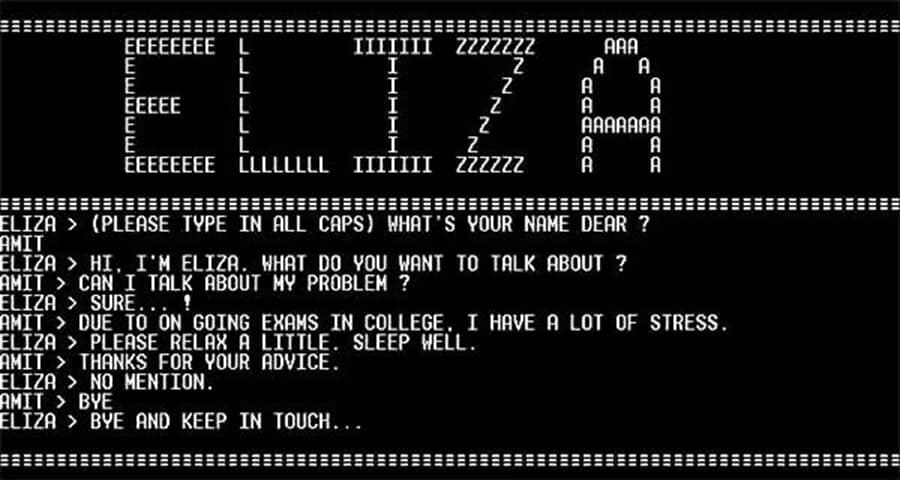
- Think Like Humans – Creating models that replicate human reasoning processes. Example: ELIZA chatbot simulating a psychotherapist.
4. Act Like Humans – Focusing on behavior that resembles human actions, such as passing the Turing Test.
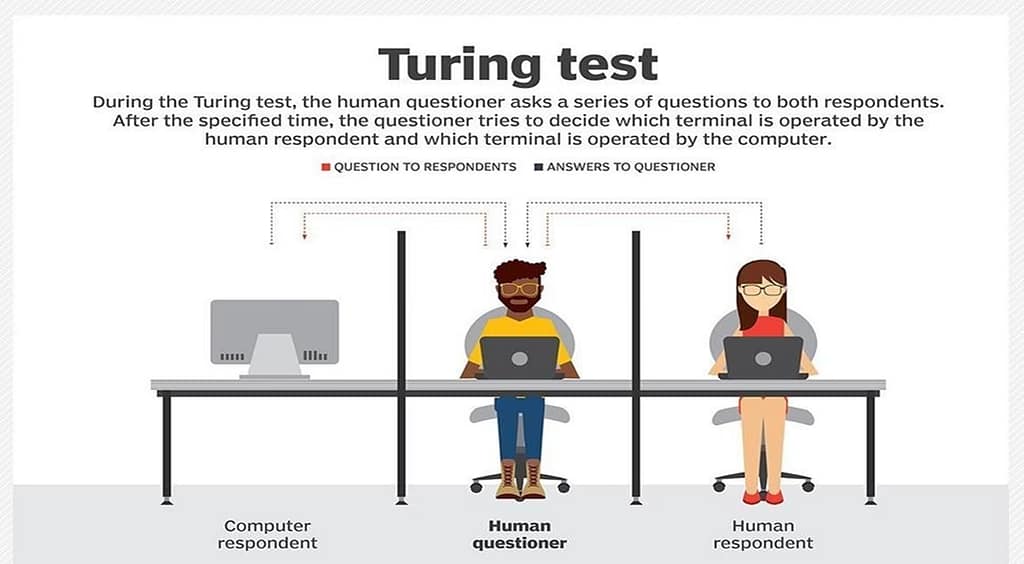
The Turing Test: Measuring AI’s Human-Like Abilities
Proposed by Alan Turing in 1950, the Turing Test checks if a computer can convincingly imitate human conversation. If a human interrogator cannot reliably distinguish the machine from another person, the machine is said to have demonstrated intelligence.
Applications of AI and Agent-Based Systems
AI is not just theoretical—it powers many real-world applications:
- Computer Vision: Face recognition in smartphones, security systems, and photo tagging.
- Robotics: Autonomous vehicles like Tesla’s self-driving cars.
- Natural Language Processing: Chatbots, real-time translation, and virtual assistants.
- Expert Systems: Medical diagnosis tools assisting doctors.
- Planning & Scheduling: Space missions like Hubble Telescope experiment scheduling.
- Gaming: AI that competes at world-champion levels in chess, Go, and video games.
- E-commerce: Personalized recommendations on Amazon, Netflix, and YouTube.
Challenges: What’s Easy and What’s Hard for AI?
Easy for AI:
- Solving mathematical problems.
- Playing strategy games like chess.
- Performing repetitive data-driven tasks.
Hard for AI:
- Recognizing emotions and body language.
- Understanding complex visual or auditory information.
- Teamwork and adaptive social intelligence (something ants and bees do naturally).
Future of Agent-Based Intelligent Systems
The ultimate goal of AI is to create systems that can:
- Act like humans (behavior-driven).
- Think like humans (reasoning-based).
- Think rationally (logic-based).
- Act rationally (decision-driven).
With advancements in deep learning, neural networks, and natural language processing, AI is moving closer to this vision. However, ethical concerns—such as job replacement, bias in AI, and the risks of superintelligence—remain hotly debated topics.
Frequently Asked Questions (FAQs)
Q1: What is the difference between AI and Machine Learning?
AI is the broader concept of creating intelligent systems, while Machine Learning (ML) is a subset of AI that enables machines to learn from data.
Q2: Can AI replace human intelligence completely?
Not entirely. AI can outperform humans in speed and accuracy but lacks creativity, empathy, and emotional intelligence.
Q3: Is Agent-Based AI the same as Robotics?
No. While robotics uses AI agents for decision-making, not all agent-based systems are physical robots. Many exist as software programs.
Q4: Which industries use Agent-Based Intelligent Systems?
Industries such as healthcare, finance, logistics, e-commerce, and cybersecurity are heavily reliant on AI-driven agents.
Conclusion
Agent-Based Intelligent Systems are reshaping the way machines interact with humans and their environment. From problem-solving chatbots to self-driving cars, these systems are bringing us closer to a world where AI not only supports but collaborates with us.
As we move toward advanced AI, balancing innovation with ethics will be the key. For students and professionals, learning about intelligent systems opens doors to careers in AI development, data science, robotics, and beyond.