
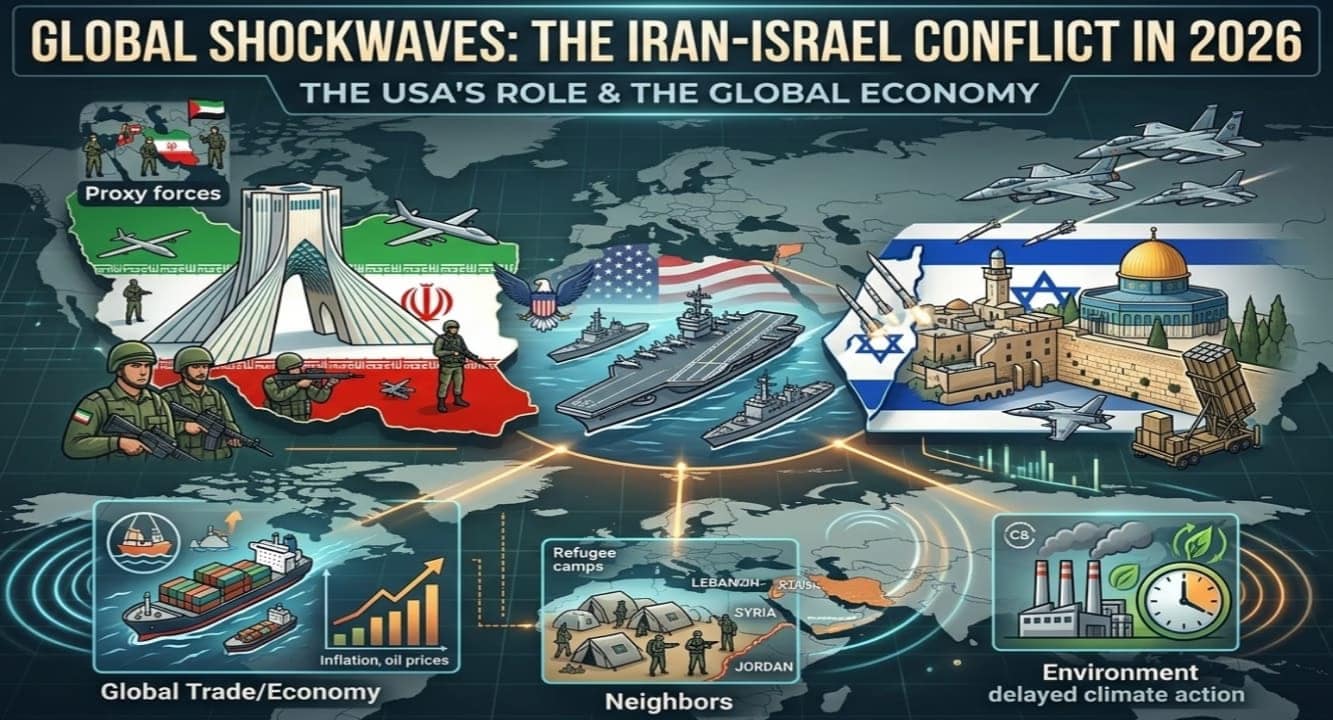
The global spotlight in 2026 remains firmly fixed on the Middle East. The escalating tensions between Iran and Israel, deeply intertwined with the strategic involvement of the United States, have pushed the region into uncharted territory. This is no longer just a regional dispute; it is a global crisis altering trade routes, international alliances, and the very atmosphere of our planet.
Here is a breakdown of the current situation, the major players, and the massive ripple effects spreading across the globe.
The Core Triangle: Iran, Israel, and the USA
The dynamic between these three nations dictates the current security climate of the Middle East.
- The Direct and Proxy Confrontations: The shadow war between Iran and Israel has firmly stepped into the light. The conflict is characterized by direct military posturing and heavy reliance on Iran’s “Axis of Resistance”—proxy groups operating in Lebanon, Yemen, Iraq, and Syria. Israel’s military strategy focuses heavily on neutralizing these threats on multiple fronts, leading to a continuous cycle of retaliation.
- The USA’s Balancing Act: The United States finds itself in a highly complex position. The U.S. maintains its ironclad military and intelligence support for Israel, frequently deploying naval assets to the Mediterranean and the Red Sea as a deterrent. However, the USA is simultaneously trying to prevent a full-scale, uncontrolled regional war that could draw American troops into direct ground combat. U.S. bases in Iraq and Syria remain on high alert due to frequent targeting by regional militias.
The Immediate Ripple Effect: Neighboring Nations
When superpowers and regional giants clash, the neighboring countries inevitably absorb the shockwaves.
- Lebanon and Syria: These nations are experiencing the most direct military spillover. Southern Lebanon remains a highly volatile flashpoint, resulting in mass civilian displacement and severe infrastructure damage. Syria continues to be utilized as a transit route and staging ground, subjecting it to frequent airstrikes.
- Jordan and Egypt: Both countries are facing intense economic and security pressures. They are dealing with border security crises, airspace disruptions, and the heavy burden of humanitarian concerns, all while trying to maintain their own domestic stability.
Global Consequences: Economics and Trade
The conflict has effectively weaponized global geography, hitting the average person’s wallet worldwide.
- Choking the Red Sea: The involvement of Houthi forces in Yemen has severely disrupted the Red Sea and the Suez Canal—one of the world’s most vital shipping lanes. With commercial vessels forced to take the much longer route around the tip of Africa, global shipping costs have skyrocketed.
- Inflation and Energy Prices: The constant threat to Middle Eastern oil facilities and transit chokepoints keeps global energy markets highly volatile. Whenever tensions spike, oil and natural gas prices surge. This energy inflation cascades down, increasing the cost of manufacturing and transporting everyday goods worldwide.
The Unseen Casualty: The Environment and Atmosphere
While human and economic costs dominate the headlines, the environmental impact of this conflict is devastating.
- Massive Carbon Emissions: Modern military operations are incredibly carbon-intensive. The constant deployment of fighter jets, naval fleets, and heavy armor across the region releases massive amounts of greenhouse gases into the atmosphere.
- Toxicity and Destruction: Bombardments destroy infrastructure, releasing toxic chemicals, asbestos, and heavy metals into the air, soil, and water supply.
- Stalling the Green Transition: The immediate need for energy security has caused many nations to double down on fossil fuels. With global tensions so high, international cooperation on climate change has stalled, making it incredibly difficult to meet global emission reduction targets.
What Happens Next?
As we navigate 2026, the situation remains a delicate powder keg. The world watches closely because a miscalculation by any single player—Iran, Israel, or the USA—could instantly transform this regional crisis into a broader global conflict.

Thank You for this informative blogs